Login or create your TorqueForm account here!
Crowdfunding of the TorqueForm


Before paperwork, get clear on the basics:
What problem does your business solve?
Who is it for?
How will it make money?
Is it a solo business, a partnership, or something you plan to scale?
You don’t need a perfect plan here—just enough clarity to make good decisions moving forward.
This is where many people get stuck, but it doesn’t have to be complicated.
Common options include:
Sole proprietorship
LLC
Partnership
Corporation (C-Corp or S-Corp)
The right structure affects taxes, liability, ownership, and future growth—so it’s worth doing intentionally rather than guessing.
Once the structure is chosen:
File the business with your state
Secure your official business name
Obtain any required state registration numbers
This step makes your business legally real.
Most businesses will need:
An EIN (Employer Identification Number)
Any required state tax IDs (sales tax, payroll tax, etc.)
This allows you to:
Open bank accounts
Pay taxes correctly
Work with vendors and platforms professionally
Keep personal and business finances separate from day one:
Open a business bank account
Set up bookkeeping or accounting software
Decide how you’ll track income, expenses, and taxes
This protects you legally and saves enormous headaches later.
Depending on your business and location, you may need:
Local business licenses
Professional or industry-specific licenses
Zoning or home-based business permits
This step ensures you’re operating legitimately, not just hopefully.
This is one of the most skipped—and most important—steps.
Examples include:
Operating Agreement (for LLCs)
Partnership Agreement
Shareholder or ownership documents
These define:
Who owns what
Who decides what
What happens if someone leaves or something goes wrong
Every business should have basic protections, such as:
Client or customer contracts
Terms of service
Privacy policy
Refund or cancellation policies
Independent contractor agreements (if applicable)
These documents protect you, your customers, and your business relationships.
At minimum:
A clean, functional website
Clear descriptions of your services or products
Proper legal pages linked on the site
Professional email tied to your domain
Your website is often your first impression and first line of defense.
Finally, think beyond launch:
Insurance coverage
Compliance check-ins
Scalable systems and processes
Documentation as the business evolves
A strong business isn’t just started—it’s maintained and engineered over time.


Goal: Know exactly what you’re building and why.
Recommended Templates & Tools:
Business Idea & Vision Worksheet
Problem–Solution Definition Template
Target Market & Customer Profile Worksheet
Revenue Model Planner
Business Name Brainstorm & Availability Checklist
Outcome:
Clarity before complexity. You’re no longer “starting a business” — you’re building this business.
Goal: Make the business legally real.
Recommended Templates & Tools:
Entity Comparison Guide (Sole Prop vs LLC vs Corp)
State Business Registration Checklist
Registered Agent Explanation & Selection Guide
Formation Filing Tracker
Outcome:
Your business exists as a legal entity, not just an idea.


Goal: Establish your business’s official identity.
Recommended Templates & Tools:
EIN Application Walkthrough
State Tax Registration Guide
Sales Tax Responsibility Checklist
Payroll Readiness Worksheet
Outcome:
You can open accounts, accept payments, and operate properly.
Goal: Protect yourself and your business financially.
Recommended Templates & Tools:
Business Bank Account Setup Guide
Chart of Accounts Starter Template
Expense & Income Tracking Spreadsheet
Accounting Software Comparison Guide
Outcome:
Clean books, clear records, and reduced personal risk.


Goal: Operate legitimately at every level.
Recommended Templates & Tools:
Federal, State, & Local License Finder
Industry-Specific Licensing Checklist
Home-Based Business Compliance Guide
Renewal & Compliance Calendar
Outcome:
No surprises, no shutdowns, no unnecessary exposure.
Goal: Prevent internal problems before they happen.
Recommended Templates & Tools:
LLC Operating Agreement Template
Partnership Agreement Template
Ownership Percentage & Voting Rights Worksheet
Exit, Buyout, & Dispute Planning Guide
Outcome:
Everyone knows the rules — even if things change later.


Goal: Protect the business in everyday operations.
Recommended Templates & Tools:
Client / Customer Contract Templates
Independent Contractor Agreement
Terms of Service Template
Privacy Policy Template
Refund & Cancellation Policy Template
Outcome:
You’re no longer relying on hope — you’re operating with protection.
Goal: Look legitimate, credible, and trustworthy.
Recommended Templates & Tools:
Website Legal Pages Pack
Website Launch Checklist
Brand Messaging & Positioning Worksheet
Professional Email Setup Guide
Outcome:
Your online presence supports your business instead of exposing it.


Goal: Prepare for real-world challenges.
Recommended Templates & Tools:
Business Insurance Coverage Guide
Risk Assessment Worksheet
Incident & Dispute Response Plan
Document Storage & Recordkeeping Guide
Outcome:
When pressure hits, your business holds.
Goal: Build something that lasts.
Recommended Templates & Tools:
Scaling Readiness Assessment
Compliance Review Checklist
Structure Re-Evaluation Guide
Expansion & Growth Planning Worksheet
Outcome:
You’re not just surviving — you’re engineering longevity.


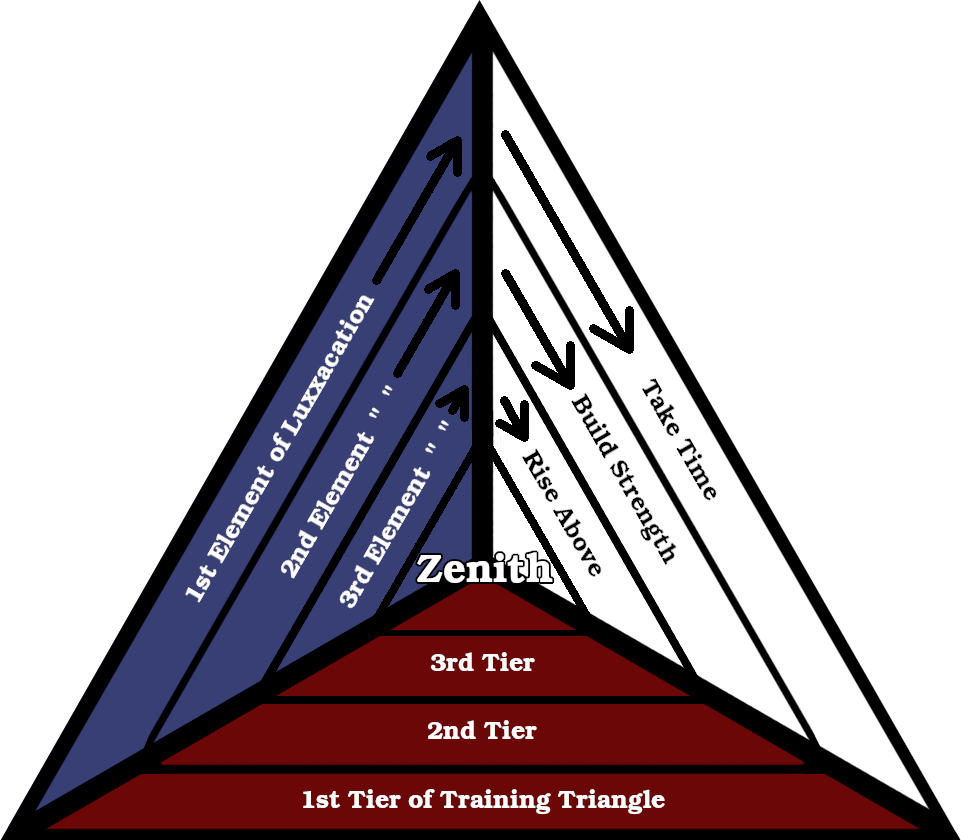
At the heart of XSE Power Coaching for business advancement is the -M-Power Training Triangle™—a strategic, visual, and systems-based architecture for intentional business transformation. Built from the XSE foundation, it is designed for founders, executives, and enterprise leaders seeking to engineer strength, sustainability, and strategic integrity into their operations.
Fully aligned with the Luxxacation Principle—Take Time. Build Strength. Rise Above.—the triangle unfolds across three executive tiers that reflect the full arc of business development, culminating in a state of Power Through Integration™:
Strategic Foundation: Reflection, Assessment, Direction
In business, “Take Time” is not hesitation—it’s precision. This tier anchors the triangle with deliberate evaluation and recalibration, ensuring that executive decisions arise from clarity rather than confusion.
Business Application:
Acknowledge your current operational status, business identity, and market positioning.
Decide what your enterprise must become—what problems you solve, and for whom.
Figure Out the pathway—determine strategic actions, build a tactical timeline, assign resources.
This is where visionary business design begins: not with motion, but with alignment.
Strategic Activation: Execution, Systems Development, Discipline
This tier is where the work gets real. It is the action layer—where clarity becomes momentum. Systems are tested, effort is invested, and internal resistance is overcome through structured practice.
Mind (Business Intelligence):
Market insight, decision-making clarity, and strategic execution.
Includes perceived and projected value—how your brand communicates worth.
Advertising, pricing, and storytelling are all filtered through this lens.
Also includes product and service articulation—how well your offerings are understood, desired, and aligned with customer need.
Body (Operations):
Infrastructure, logistics, and production systems.
Profit margins, cash flow, and total client/account numbers serve as hard metrics of physical business health.
Daily workflow and service execution must reflect alignment with your business model.
Spirit (Brand & Culture):
Culture is your internal compass; inspiration is what your team and market feel from you.
Appeal is how your business draws people in—emotionally, aesthetically, and energetically.
Spirit here doesn’t mean mysticism—it’s the unseen fuel of innovation and magnetism.
This is the tier of resilience, internal training, and external traction.
Strategic Transcendence: Integration, Vision Realization, Elevated Function
This top tier reflects a business no longer just performing, but transcending barriers and embodying its purpose.
Mind: Executive Intelligence
Not data overload, but distilled wisdom.
The ability to rise above distraction, misinformation, or market pressure and make decisions from principle, not panic.
Body: Functional Strength
Business systems become adaptive and responsive.
The team moves as a single unit; customer experience is reliable.
The company can endure and adapt without losing core identity.
Spirit: Organizational Freedom
When culture becomes compelling and purpose becomes unshakable.
The enterprise leads not just through product, but through truth, inspiration, and magnetic appeal.
You’re not just in the market—you set the market tone.
Power State: Strategic Coherence Across the Enterprise
The summit of the -M-Power Triangle is a business operating in its Power State™—where each domain (mind, body, spirit) is refined, aligned, and activated.
Strong Business Body → Profitable, resilient systems with growing client base
Sharp Executive Mind → Strategic foresight, high-value communication, market authority
Free Business Spirit → Culture-driven leadership, authentic appeal, inspired innovation
This is the emergence of the Sustaining Systems Leader™, no longer reactive, but architecting the future with coherence and strength.
When paired with the Luxxacation Principle, the -M-Power Triangle becomes more than a model—it becomes a trajectory:
Take Time – Clarify value, define direction, establish structure
Build Strength – Train systems, increase profits, inspire culture
Rise Above – Lead with coherence, transcend confusion, impact markets
This is business evolution with intelligence, integrity, and momentum.